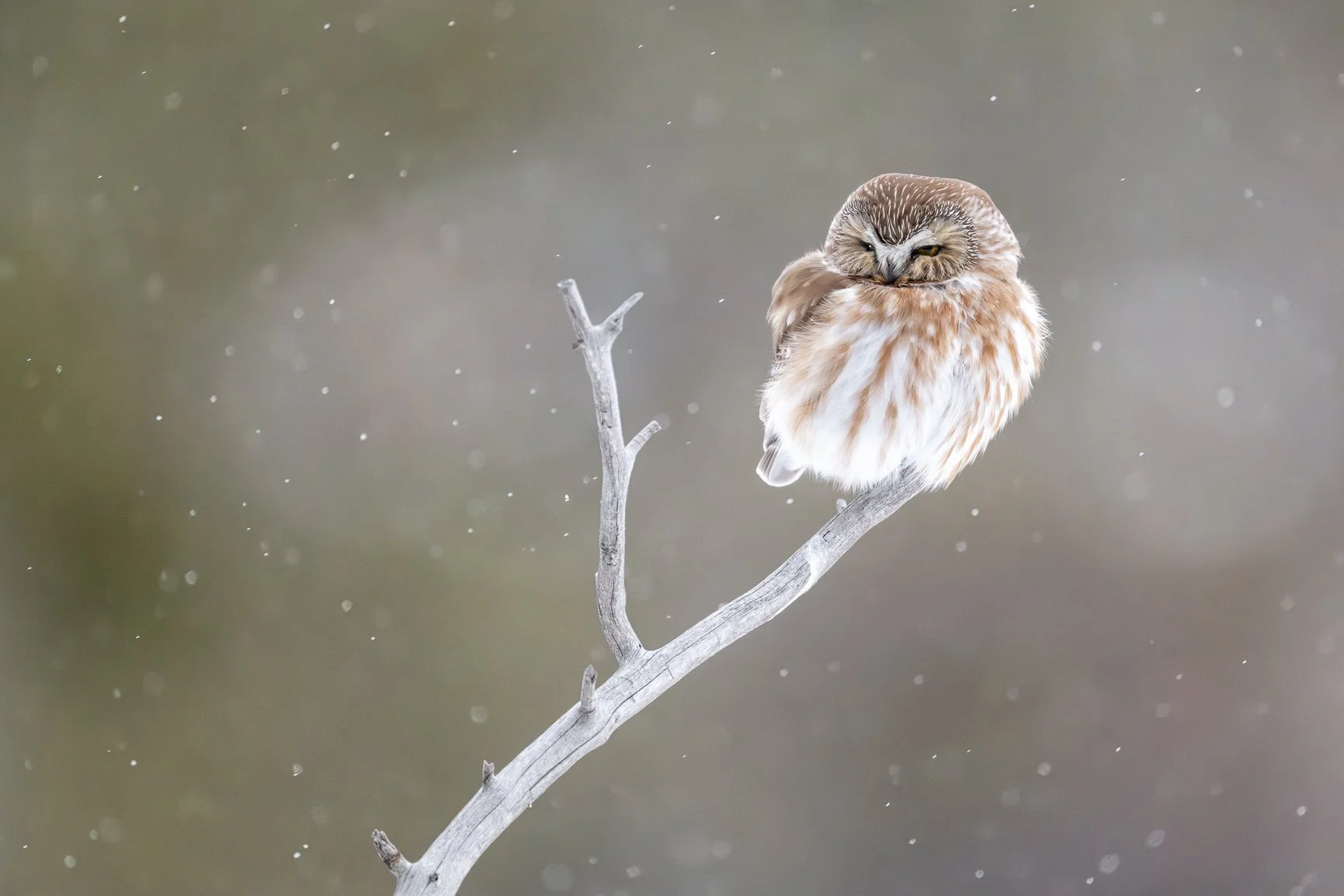
Storytelling in Wildlife Photography
📖 Storytelling in Wildlife Photography
Great wildlife photography is more than sharp images and good light—it’s the ability to tell a story. A storytelling approach transforms single moments into emotional, memorable, and impactful images that connect your viewer to the natural world.
What Makes a Wildlife Story?
A strong story answers one or more of these questions:
What is happening?
Why does it matter?
What emotion or behavior is being shown?
What is the relationship between subject and environment?
A compelling story can be found in:
behavior (a fox listening, a wolf scent-marking)
mood (snowstorm, golden light, backlit steam)
relationships (mother/young interactions, rivalries)
environment (the vastness of Yellowstone winter)
Storytelling isn’t always dramatic—it’s about intentionality.
The Three Types of Wildlife Stories
A. Behavioral Stories
These capture action or emotion:
a fox diving
wolves greeting
an owl preparing for flight
a bison shaking off snow
Goal: Convey energy, anticipation, or movement.
B. Environmental Stories
These show the animal in the context of its world:
a fox dwarfed by the winter landscape
a lone bison in a blizzard
a coyote trotting across a snowy ridge
Goal: Reveal scale, place, and the ecosystem.
C. Intimate Portrait Stories
These create connection:
eye contact
unique angles
expressions or gestures
Goal: Help the viewer emotionally relate to the animal.
Finding the Story: Questions to Ask Yourself in the Field
What is the animal doing right now?
What might it do next?
What emotion do I want the viewer to feel?
Is this a moment about behavior or environment?
Would a wider frame tell more of the story?
Do I need to move for a better background or angle?
Intentional decisions create stronger storytelling.
Building a Story Sequence
A story can be told through a single image, but sequences are incredibly powerful. Think of the fox dive sequences—they tell a complete narrative.
A full sequence might include:
Establishing Shot – environment, scene, mood
Character Shot – clean portrait to introduce the subject
Behavior Shot – action or interaction
Closing Shot – a quiet moment, aftermath, or wide composition
Compositional Tools for Strong Stories
A. Leading Lines
Use snowbanks, ridges, rivers, trees to direct attention.
B. Negative Space
Creates mood and emphasizes isolation or scale.
C. Movement Direction
Leave space in front of the animal—makes the story feel open.
D. Subject Placement
Use rule of thirds or center-frame depending on mood.
E. Layering
Foreground elements like snow spray, branches, or steam add depth.
Light as a Storytelling Element
Winter light in Yellowstone is magical.
Backlight → drama, halo edges, steam, breath
Side light → shape, texture, contours
Flat light → soft, quiet, minimalistic tone
Storm light → intensity and contrast
Light helps communicate how the moment feels.
Choosing the Hero Image
The “hero shot” is the image that best represents the story.
It should:
be the strongest emotional moment
showcase the clearest behavior or mood
have the cleanest composition
instantly communicate the message
Ethical Storytelling
True storytelling honors the animal.
Ethics must always come before the shot:
Give space
Never alter behavior
Stay quiet and still
Avoid blocking their natural travel routes
Know when to back off
A story that respects the subject is always stronger.
Final Thought
Storytelling turns wildlife photography into something emotional, meaningful, and memorable.
It’s where technique meets heart. And winter in Yellowstone gives endless opportunities to tell stories that matter.